Tag Archives: Legal Education

Found In The Stacks: “Reports of Cases in the Superior Court of Connection 1785-1788” by Ephraim Kirby

By Bill Bucklin

Ephraim Kirby must have been a fascinating person to have a drink with during his service as a lawyer in Litchfield in the 1780s and 1790s.
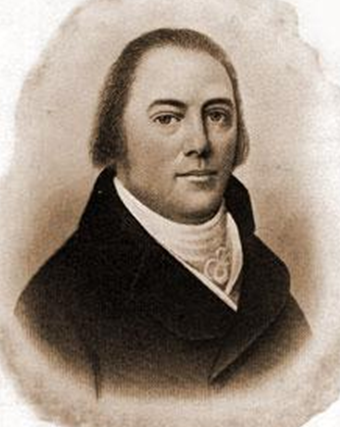
Ephraim Kirby

Born in Woodbury, Kirby volunteered for Revolutionary War service just after the battle of Lexington and was wounded thirteen times. After the war he attended Yale University, leaving without a degree. After apprenticing to become a lawyer  he was admitted to the bar and settled in Litchfield. Kirby’s son attended Tapping Reeve’s famous law school, where Reeve was teaching students to transpose English common law for the needs of America’s emerging legal system.

Kirby recognized the need for a written record of court decisions and began to compile any reports he could find. When the Connecticut legislature passed a law in 1785 requiring judges to prepare their decisions in writing, Kirby realized he had struck legal gold. Kirby spent three and a half years in a different form of service to his country, collecting every single Superior Court case report.
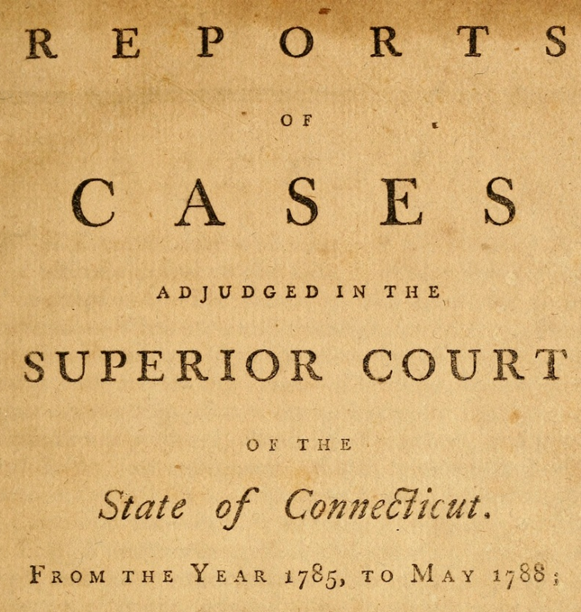
Reports of Cases Adjudged in the Superior Court of the State of Connecticut, from the year 1785, to May, 1788.

In 1789 Kirby visited Thomas Collier, Litchfield’s first printer, and left him with the manuscript of Reports of Cases Adjudged in the Superior Court of the State of Connecticut, from the year 1785, to May, 1788. Collier set the 425 pages of type, and in 1789 America’s first-ever volume of law reports was published.

Recognizing the volume’s significance, the Connecticut legislature ordered 350 copies which were sent to all Connecticut towns. It’s easy to imagine Tapping Reeve’s delight at adding this treasured volume to the Litchfield Law School’s expanding law library.
Law School Letters

The Helga J. Ingraham Memorial Library at the Litchfield Historical Society has recently purchased three new letters pertaining to the Litchfield Law School and its students. Two of the letters are likely relatable to many of today’s parents as they discuss the expense of educating children.

The first letter, written in 1815 by Putnam Catlin, father of Litchfield Law School student George Catlin (who later left the law to paint) was addressed to his friend Steuben Butler and detailed the financial difficulty in providing for his children’s education:

I am obliged to consider myself as a mere farmer, republican farmer, Beechwood farmer, without a hired man in this hurrying season of the year. How then am I to spare George and James? I admit that your reasoning is just in regard to George but I know not how to spare him at this time. I shall not be able to give him a public education. If he shall persist in the choice of law he will have to glean for himself an education in some law office, perhaps. I may indulge him a year at Litchfield, in the meantime, I will do better for him if it be in my power. Should my ‘ship arrive from England’ or should I make sale of some land I can spare he may be more favored.

Putnam Catlin to Steuben Butler, May 3, 1815
detailed image
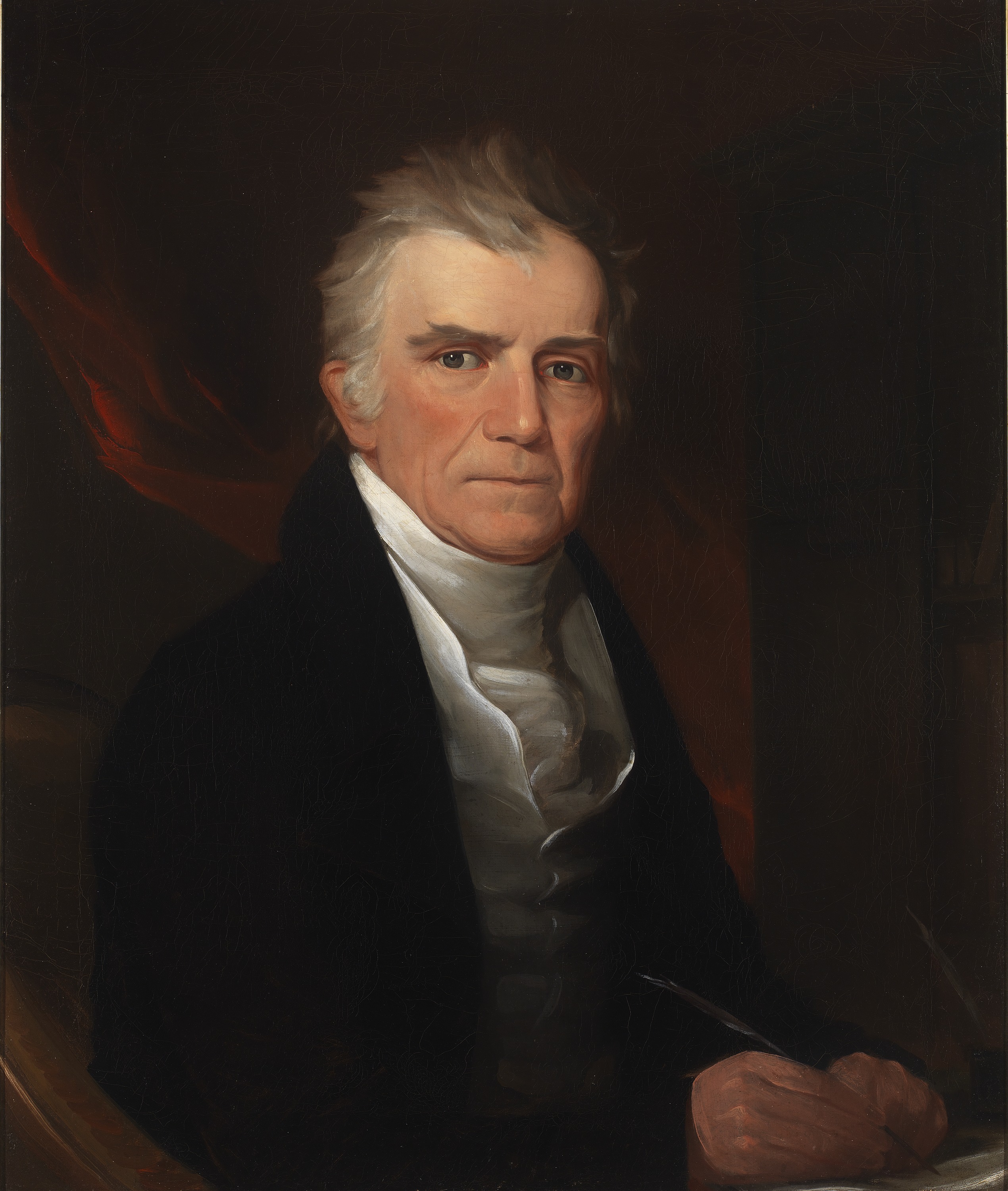
Putnam Catlin by George Catlin, Smithsonian American Art Museum, between 1840-1849
Continue reading

A Book Review by the Chief Justice

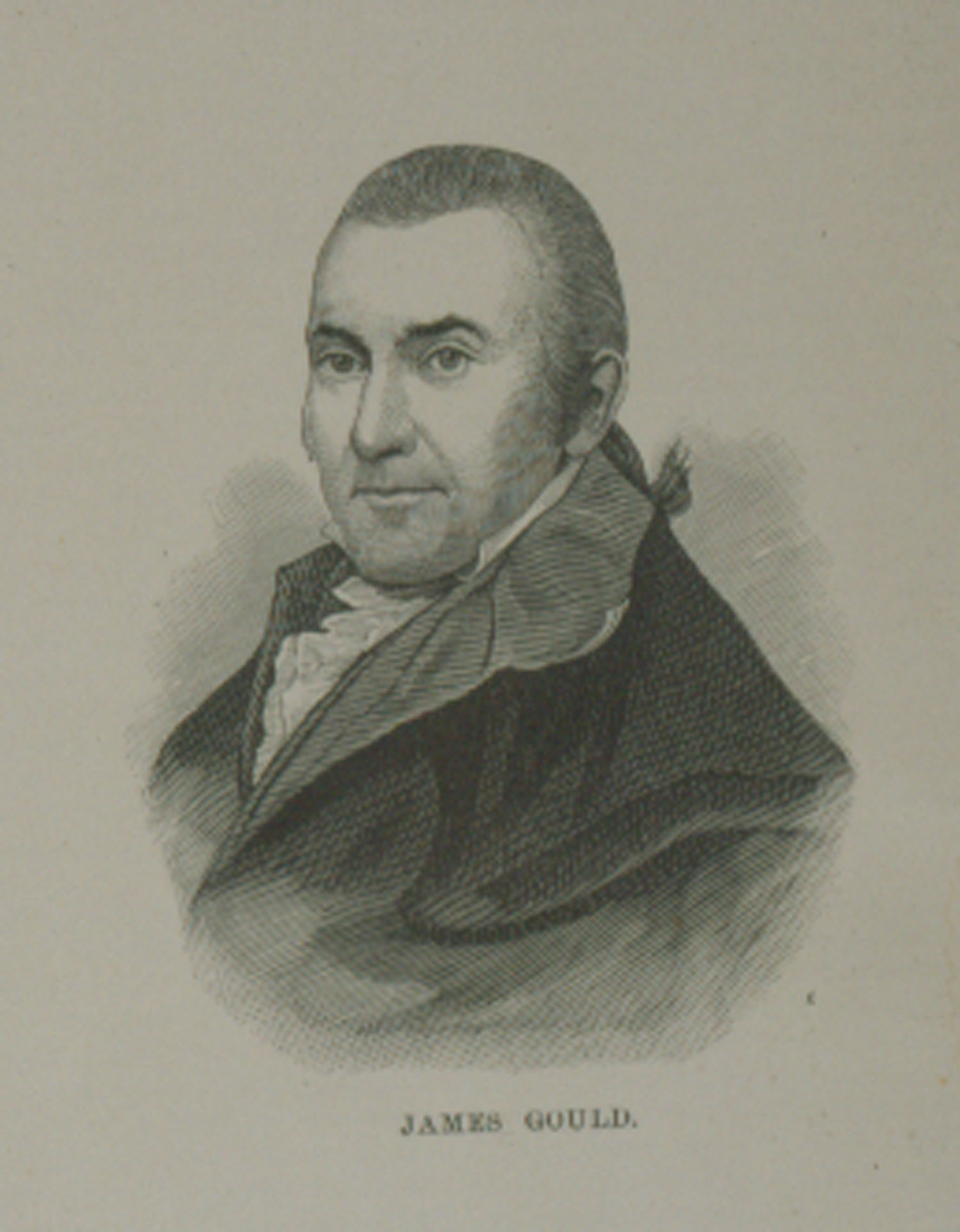
The Litchfield Historical Society is thrilled to announce the acquisition of a previously unpublished letter from U.S. Supreme Court Chief Justice John Marshall to Judge James Gould, instructor at the Litchfield Law School, in which Marshall provides feedback on Gould’s book about pleadings.

detailed image
Engraving of James Gould
Continue reading