Tag Archives: Litchfield History

Found In The Stacks: “Rails of the World: A Monograph of the Family Rallidae” by S. Dillon Ripley

Written by Bill Bucklin

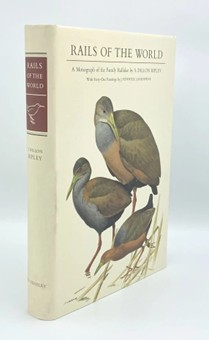
Lying on its side among the shelves of old leatherbound volumes, the big book with three stately birds on the front cover practically begs you to pick it up. Rails of the World: A Monograph of the Family Rallidae by S. Dillon Ripley is not about railways, but about Ripley’s favorite subject–birds. From a review by Roger Tory Peterson: “Among the least known and most elusive of any major bird species, rails manage to colonize remote islands, impenetrable jungles and desolate shorelines in almost all regions of the world.”

Rails of the World: A Monograph of the Family Rallidae by S. Dillon Ripley (1977)

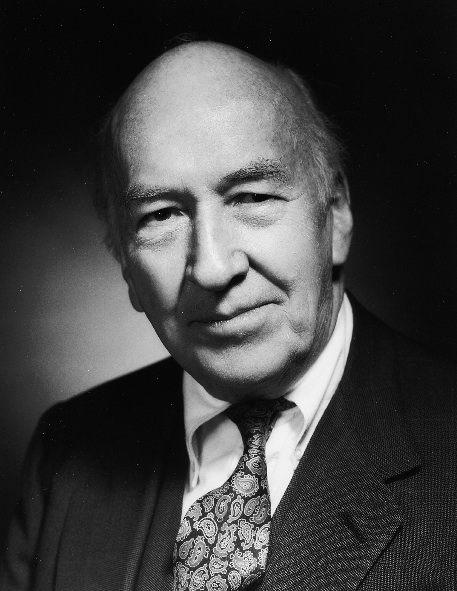
The book is a window into the world of S. Dillon Ripley, one of Litchfield’s most fascinating residents. Rosemary Ripley, his daughter, said in an interview: “My father was interested in birds from a very young age. My grandmother was a single mother. She decided to take the family to live in India for a year. My father was 13 and living there opened his eyes to the natural world.”

Sidney Dillon Ripley II.

Ripley continued his interest in bird species as a teenager in Litchfield in the 1920s. Later he became a professor of ornithology at Yale University, served as Director of Yale’s Peabody Museum of Natural History, and in 1964 became the Secretary of the Smithsonian Institution. His greatest contribution to Litchfield is the Ripley Waterfowl Conservancy, which he and his wife founded in 1985.

S. Dillon Ripley died in 2001 and is buried in Litchfield’s East Cemetery, but his legacy is very much alive in Litchfield.

Found In The Stacks: “The Lady of the Lighthouse” by Helen Smith Woodruff

Written by Bill Bucklin

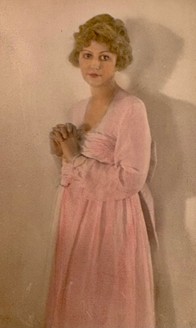
When you think of famous authors from Litchfield, CT, of course Harriet Beecher Stowe comes to mind. The works of a second Litchfield author, once famous, also reside in the stacks of the Litchfield Historical Society. Helen Smith Woodruff wrote 11 novels between 1912 and 1921, some of them completed while summering in Litchfield with her husband Lewis B. Woodruff of New York City, descendant of one of Litchfield’s founding families.

Helen Smith Woodruff was a society woman with a remarkable social consciousness. After undergoing a short period of blindness from scarlet fever she wrote the novel The Lady of the Lighthouse, published in 1913. The lighthouse in the title is misleading, because Woodruff’s focus is on the main character’s mission to brighten the world of a young blind boy in New York City, one of many blind children at a rehab facility known as the Lighthouse. Woodruff donated the proceeds of all her books to charity. The $300,000 in royalties from The Lady of the Lighthouse went to the New York Association for the Blind, the equivalent of ten million dollars today.

Helen Smith Woodruff

Helen Smith Woodruff died in New York City in 1924 as the result of a fall from a second-story window in her New York home after a long period of illness at the age of only 36 (https://encyclopediaofalabama.org/article/helen-smith-woodruff/). One imagines summers in Litchfield were darker without her.

“Exhilarating, Exciting” – Richard S. Chisolm’s Account of the 1925 Solar Eclipse

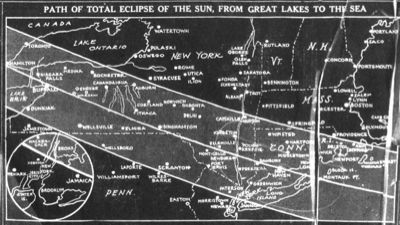
Sweeping across the continent from Mexico through Canada on Monday, April 8, 2024 the “Great North American Eclipse” has captured the nation’s attention. NASA estimates that over 31 million people live in the path of totality and far more will travel to join them. Laying outside the path of totality for this eclipse, the people of Litchfield were plunged into mid-morning darkness on January 24, 1925.

The path of 1925 total solar eclipse (Butler Papers, Archives of American Art, Smithsonian Institute

Typed by part-time Litchfield resident Richard S. Chisholm, the account below details his anticipation of the event and the challenges amateur astronomers faced that snowy, cloudy January:

Continue reading

Law School Letters

The Helga J. Ingraham Memorial Library at the Litchfield Historical Society has recently purchased three new letters pertaining to the Litchfield Law School and its students. Two of the letters are likely relatable to many of today’s parents as they discuss the expense of educating children.

The first letter, written in 1815 by Putnam Catlin, father of Litchfield Law School student George Catlin (who later left the law to paint) was addressed to his friend Steuben Butler and detailed the financial difficulty in providing for his children’s education:

I am obliged to consider myself as a mere farmer, republican farmer, Beechwood farmer, without a hired man in this hurrying season of the year. How then am I to spare George and James? I admit that your reasoning is just in regard to George but I know not how to spare him at this time. I shall not be able to give him a public education. If he shall persist in the choice of law he will have to glean for himself an education in some law office, perhaps. I may indulge him a year at Litchfield, in the meantime, I will do better for him if it be in my power. Should my ‘ship arrive from England’ or should I make sale of some land I can spare he may be more favored.

Putnam Catlin to Steuben Butler, May 3, 1815
detailed image
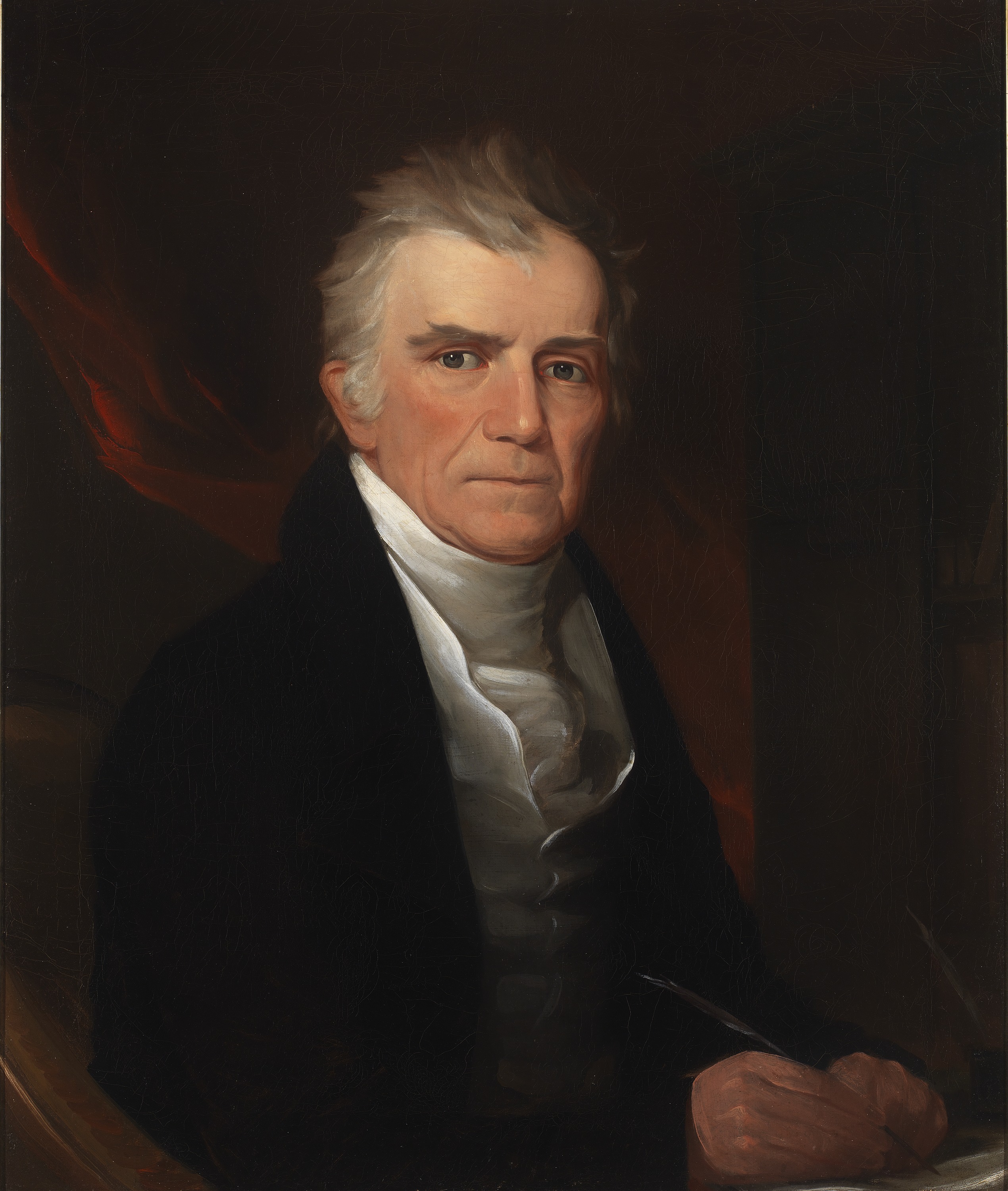
Putnam Catlin by George Catlin, Smithsonian American Art Museum, between 1840-1849
Continue reading

A Book Review by the Chief Justice

The Litchfield Historical Society is thrilled to announce the acquisition of a previously unpublished letter from U.S. Supreme Court Chief Justice John Marshall to Judge James Gould, instructor at the Litchfield Law School, in which Marshall provides feedback on Gould’s book about pleadings.

detailed image
Engraving of James Gould
Continue reading